Teksti ja valokuvat: Elias Rantanen / Ltattoos
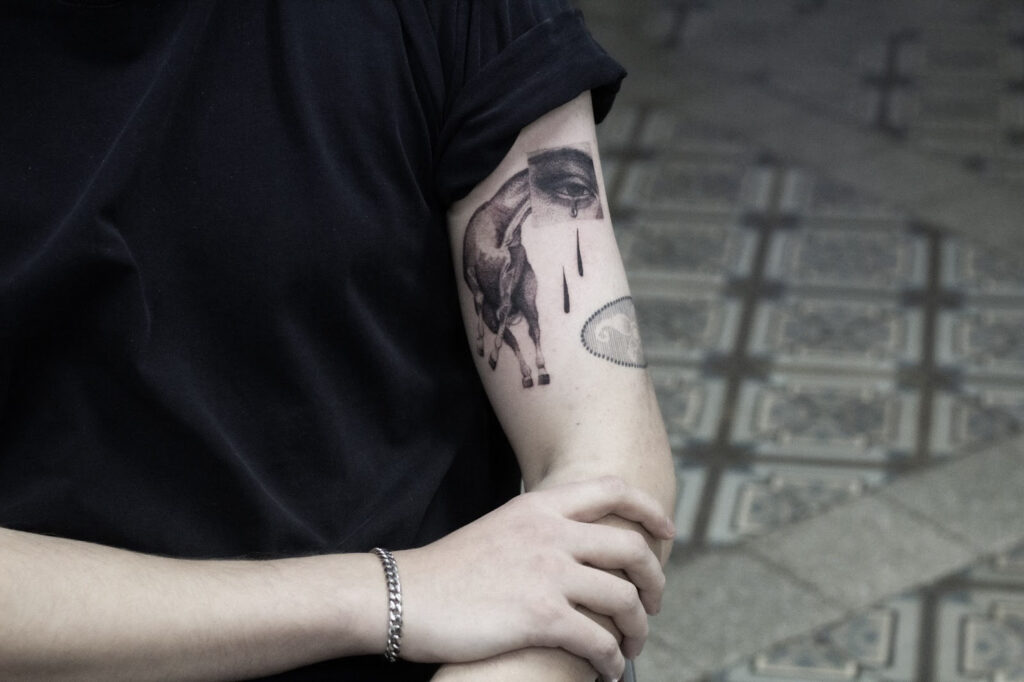
At their core, by marking one’s body, tattoos are a form of meaning-making and expression that humans have engaged with for as long as I know of. The tools and the medium of doing so have changed but the impulse hasn’t. Getting a tattoo is a decision to create something that is there to stay, to be carried on your body permanently, whether it’s a way to stand out, remember, express, or to simply decorate one’s body.
As a tattoo artist, I find myself creating designs in different flow states, and with different motives. On one hand, I create based on an idea I’d like to actualize, by either tapping into an emotion or traditional symbolism. On the other, I find myself creating playfully and freely on an aesthetic foundation.
I’d say that I’m mostly known for two expressions of tattoo art: my ‘’trademark style’’ of combining abstract and graphic elements in contrasting blackwork, as well as my soft stipple shading. In the latter, I regularly play with the form of a flower, or by warping elements in my designs to create surrealistic compositions. Additionally, I’m known for my abstract linework pieces, which are created freehand to flow and contour the body.
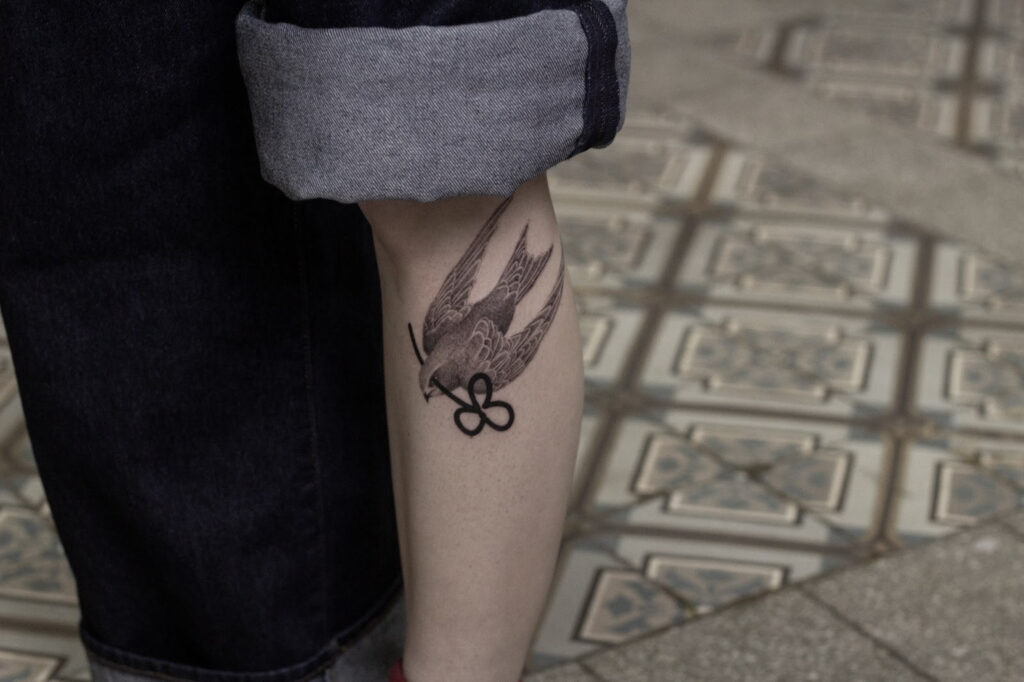
In addition to the aforementioned styles, I enjoy drawing on traditional tattoo symbolism by creating designs, such as my version of the famous painting Pharaoh’s Horses. That design draws on the painting’s symbolism of power and liberation; however, a power held in restraint. The horses represent strength pushed to its limits, and this tension in the meaning of the painting is often interpreted as a balance between control and inevitability. Within tattooing, it is a classic symbol of bravery and the resilience of the human spirit. Regardless of the traditional symbolism, designs can evolve, and the interpretation of the tattoo is in the eyes of the beholder.
What I’ve blabbed on about above begs the question of what the role of symbolism is in tattooing. Of course you can get tattooed for purely aesthetic reasons, but even then, I’d argue that tattoos are functioning as some form of meaning-making, whether personal or social. And in the case of traditional symbolism, like horses, one can incorporate the message behind the tattoo into a form of self-expression.
In summary, I think it’s important to consider symbolism in tattooing, traditional or not, as an opportunity to communicate something through the art on our bodies. The tattoos we carry with us can be a part of what makes us, something that brings us together through aesthetics, or provokes thoughts and emotions in others.